Product Description
Products Collection
Product Description
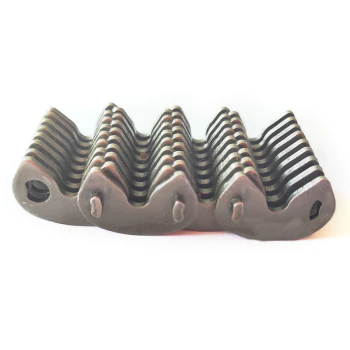
QLZ Chains feature symmetrically toothed link plates on both sides, enabling equal performance and precision during bilateral use. This design makes it an ideal solution for applications with changes in the direction of rotation or for multi-shaft drives. Their flexibility ensures they can easily handle these situations, providing reliable and consistent performance.
When you need a specific design, we can provide customised solutions based on what you need. Whether you require specific features, plans, materials, or specifications, our team can work to ensure you get a chain that fully meets your needs.
Are you looking for other chains?
Leave your message below, and feel free to contact us!
FAQ
| Question 1: Are you a Manufacturer or a Trading Company? |
| Answer: We are a 100% chain manufacturer with 23 years of experience |
| Question 2: What should I provide to get a quotation? |
| Answer: 1. Type of the chain (with photos if available) 2. Pitch of the chain 3. Width of the chain 4. Length and quantity of the chain 5. Other specific requirements |
| Question 3: How long is your manufacturing and delivery time? |
| Answer: Products are usually finished in 2 weeks, depending on the type and quantity. Also, please get in touch with us to check the delivery time to your destination. |
| Question 4: How long is your guaranteed time? |
| Answer: We offer a three-year guarantee if you purchase chains and matched sprockets together. If you need chains only, a one-year guarantee can also be confirmed. |
| Question 5: Trade terms and Payment terms? |
| Answer: We accept EXW, FOB, DDU, Door to Door. Payment terms, such as T/T, L/C, and Western Union, are acceptable. We also provide the service of Online Trading in this B2B platform. |
Company Profile
|
Shipping Cost:
Estimated freight per unit. |
To be negotiated |
|---|
| Standard or Nonstandard: | Standard |
|---|---|
| Application: | Textile Machinery, Garment Machinery, Conveyer Equipment, Packaging Machinery, Food Machinery, Marine, Mining Equipment, Agricultural Machinery, Car |
| Structure: | Tooth Chain |
| Samples: |
US$ 100/Meter
1 Meter(Min.Order) | Order Sample |
|---|
| Customization: |
Available
| Customized Request |
|---|
Can a drive chain be used in a pharmaceutical or medical device manufacturing application?
Yes, a drive chain can be used in pharmaceutical and medical device manufacturing applications where reliable and efficient power transmission is required. Here is a detailed explanation:
In pharmaceutical and medical device manufacturing, various types of equipment and machinery are utilized for processes such as mixing, blending, encapsulating, packaging, labeling, and assembly. Drive chains offer several advantages in these applications:
- Precise Power Transmission: Drive chains provide precise power transmission, ensuring the synchronized movement and precise positioning of the pharmaceutical and medical device manufacturing equipment. This allows for reliable and efficient production processes, precise control over the manufacturing operations, and accurate assembly of medical devices.
- High Load Capacity: Drive chains are designed to handle heavy loads and transmit power in pharmaceutical and medical device manufacturing equipment. They can effectively transmit power to drive mechanisms involved in conveyor systems, robotic arms, rotary tables, and other equipment, allowing for efficient material handling and assembly processes.
- Robustness and Durability: Pharmaceutical and medical device manufacturing environments often require clean and sterile conditions. Drive chains are designed to withstand these conditions and provide durability, resistance to wear, and long service life even in demanding applications. They can also withstand frequent cleaning and sterilization procedures without compromising their performance.
- Flexibility and Adaptability: Drive chains offer flexibility and adaptability in designing and configuring pharmaceutical and medical device manufacturing equipment. They can be easily integrated into different types of conveyors, robotic systems, and assembly lines, allowing for efficient material flow, product handling, and process control.
- High-Speed Capability: Drive chains can accommodate high-speed operation in pharmaceutical and medical device manufacturing applications. They are designed to provide reliable power transmission even at high rotational speeds, ensuring efficient production rates and meeting the demands of fast-paced manufacturing processes.
- Cleanliness and Contamination Control: Drive chains can be selected with materials and coatings that meet the cleanliness and contamination control requirements of pharmaceutical and medical device manufacturing. This ensures that the chain materials are suitable for cleanroom environments and do not introduce any contaminants that could compromise the quality of the products being manufactured.
It is important to consider the specific requirements of the pharmaceutical or medical device manufacturing application when selecting a drive chain. Factors such as load capacity, speed, cleanliness, regulatory compliance, and maintenance considerations should be taken into account.
Regular maintenance, including inspection, lubrication, and tension adjustment, is crucial to ensure optimal performance and longevity of the drive chain in pharmaceutical and medical device manufacturing applications.
By utilizing drive chains in pharmaceutical and medical device manufacturing, operators can benefit from precise power transmission, high load capacity, durability, flexibility, high-speed capability, and cleanliness, contributing to efficient and reliable manufacturing processes.
How does the weight of a drive chain affect its performance?
The weight of a drive chain can have some impact on its performance, although it is generally not a significant factor. Here is a detailed explanation:
The weight of a drive chain refers to the mass of the chain itself. While the weight of the chain may vary depending on its size, type, and material, it is typically not a critical consideration in most applications. Here are a few points to understand about the weight of a drive chain:
- Inertia: The weight of the drive chain contributes to its inertia, which is the resistance to changes in motion. In high-speed or dynamic applications, such as robotics or automation, excessive chain weight can increase inertia and potentially affect the responsiveness and precision of the system. However, the weight of the chain is usually relatively small compared to other components in the system, and the impact on performance is often minimal.
- Tension and Tensioning Mechanisms: The weight of the chain can influence the tensioning requirements and the design of tensioning mechanisms. Heavier chains may require stronger tensioning systems to maintain proper tension and prevent chain slack. It is essential to consider the weight of the chain when designing and implementing tensioning mechanisms to ensure optimal performance.
- Load Capacity: The weight of the chain itself does not significantly affect the load capacity or strength of the chain. The load capacity is determined by the chain’s design, material, and construction. Proper chain selection based on the specific application requirements is necessary to ensure sufficient load-carrying capacity.
- Installation and Handling: The weight of the chain can influence the ease of installation and handling, especially in larger or heavier chains. Proper lifting and handling equipment should be used to ensure safe installation and prevent injuries.
Overall, while the weight of a drive chain can have some minor influence on its performance in certain applications, it is typically not a critical factor. Factors such as chain design, material, lubrication, tension, and alignment have a more significant impact on the overall performance and reliability of the drive chain.
How do you properly tension a drive chain?
Tensioning a drive chain properly is important to ensure optimal performance, minimize wear, and prevent premature failure. Here are the steps to properly tension a drive chain:
- Identify the Tensioning Method: Determine the type of tensioning system used for your specific drive chain. Common tensioning methods include manual adjustment, automatic tensioners, or tensioning devices incorporated into the chain drive system.
- Refer to Manufacturer’s Guidelines: Consult the manufacturer’s guidelines or specifications for the recommended tensioning range and procedure specific to your drive chain. Manufacturers often provide specific instructions regarding the appropriate tensioning method and the acceptable slack or sag limits.
- Measure the Initial Tension: Measure the initial tension of the drive chain. This can be done using a tension gauge or by applying manual force to the chain at a specific point and measuring the deflection or sag. Ensure that the initial tension is within the recommended range specified by the manufacturer.
- Adjust Tension: If the initial tension is outside the recommended range, adjust the tension accordingly. For manual tensioning systems, typically a tensioning device, such as an adjusting bolt or eccentric cam, is used to increase or decrease the tension. Follow the manufacturer’s instructions for the specific adjustment mechanism.
- Check Alignment: While tensioning the chain, ensure that it remains properly aligned on the sprockets. Misalignment can cause uneven wear and premature failure. Make any necessary alignment adjustments as per the manufacturer’s recommendations.
- Recheck Tension: After tension adjustment and alignment, recheck the tension to ensure it falls within the recommended range. Use a tension gauge or follow the manufacturer’s guidelines for measuring the tension. Repeat the adjustment process if necessary.
- Verify Operation: After tensioning, operate the machinery or system with the tensioned chain and observe its performance. Check for any abnormal noise, vibration, or unusual wear patterns. If any issues persist, reevaluate the tensioning and alignment.
It is important to note that proper tensioning may require periodic rechecks and adjustments over time as the chain elongates or wears. Regular maintenance and inspections will help ensure the drive chain remains properly tensioned and aligned for optimal performance and longevity.


editor by CX 2023-10-08