Product Description
Carbon Belts
Kaihong brand CHT series carbon fiber bicycle synchronous belt launched by ZHangZhoug Sanxing Rubber Belt Co. , Ltd. uses high performance HNBR rubber, ultra- high strength carbon fiber rope and high wear- resistant nylon toothed cloth to perfectly replace the traditional chain. It needs no lubrication when used, has low noise, high transmission efficiency, and is stable and comfortable when riding.
Production Features of Carbon Belts
Carbon Belts is built for better performance, more flexibility, and greater resistance to moisture. Input your Poly Chain GT Carbon belt specs to determine the optimal tension for your belt drive system.
Features:
- -40ºC~150ºC; Ultra-wide operating temperature range: -40ºC~150ºC
- Excellent mechanical and chemical properties, ultra-high tooth shear force, effectively avoid tooth jump
- Carbon cord with ultra-high-strength and lowest elongation
Advantages:
- Patented PTFE coating tooth fabric, super wear-resistant, self-lubricating, low noise, and long life
- Back nylon design, high transverse strength, low vibration, perfect protection for the back of belt.
- Optimized mm tooth profile, perfect meshing with pulley, especially suitable for the bicycle industry
Product specification of Carbon Belts
- 1. Specially treated fabric
- 2. Polyurethane teeth
- 3. Carbon tension member
- 4. Polyurethane backing
Structure and materials
Top cloth: nylon elastic cloth ( enhance transverse strength and reduce vibration)
Cord : carbon fiber thread ( ultra- high tensile strength, extremely low elongation)
Rubber: HNBR rubber( excellent wear resistance, temperature resistance, aging resistance and bending resistance)
Tooth cloth: nylon elastic cloth ( to enhance the strength and wear resistance of belt tee
Basic size
| Type | Pitch | Tooth height | Thickness | Width |
| H8M | 8mm | 3.38±0.2mm | 5.5±0.6mm | 12±0.4mm |
| H11M | 11mm | 5.0±0.2mm | 7.5±0.6mm | 12±0.4mm |
Physical properties
| Type | tensile strength (annular) | Tooth shear |
| H8M | ≥ 1330N/mm | ≥ 130N/mm |
| H11M | ≥ 1670N/mm | ≥ 180N/mm |
| Item | Sanxing | Gates |
| Main material | Rubber | Polyurethane |
| Tensile strength (annular) |
2005 N/mm | 1762 N/mm |
| Tooth shear strength |
202 N/mm | 158 N/mm |
| Temperature resistant |
– 4 0 C~ 1 5 0 C | – 3 5 C~ 8 5 C |
Matching pulleys
| Type | Frequency | |
|
Internal shifting |
Bicycle, hub motor electric bicycle |
35~50Hz |
| Mid-mounted motor electric bike |
40~55Hz |
|
| Non-variable speed | 45~65Hz | |
Factory
ZHangZhoug CZPT Rubber Belt Co., Ltd. was established in 1989. 350 workers, 8500 square metre non-dust workshops, 34 years experience, We got ISO/TS16949:2002(renamed as IATF16949:2016)and ISO9001:2015, all products pass RoHS test by TUV so as to effectively control the quality, and provide customers with guaranteed high-quality products
Sanxing company possesses a complete set of advanced production and testing equipments. We specializes in designing and producing Raw Edge Cogged V-Belt, Poly V-Belt, Roll Mill Belt, Timing Belt, Polychain Carbon Timing Belts, Agricultural belts, and Industrial Belts and other related rubber products. These products are widely used in the area of automotive, scooter, industrial and agricultural machinery, household appliances, etc. We have high reputations among our domestic and overseas customers.
Environmental &Quality Certificate
Exhibition
Delivery,Shipping and Service
What about the delivery time?
2-3 days for sample, 45 working days for mass production. Depends on qty/sizes
The payment term
TT / LC /west union / PayPal / cash.
Payment=1000USD, 50% T/T in advance ,balance before shipment.
Package
Standard export cartons, box dimension: 470x400x460mm
Shipping
Sea/ Air/ UPS/DHL/TNT/FedEx
After Service
We will replace the belts if customer receives the defective belts.
FAQ
Q. What’s the raw material?
A. CR, Fiberglass cord; aramid / kevlar available
Q. What’s the minimum order qty?
A. 1 sleeve each sizes, Double sided timing belt 2 sleeves.(1000$/order)
Q.Can we use our brand/LOGO ?
A. Yes, we can print customers’ brands/LOGO.
Q. What’s the sleeve width?
A.1000 mm ( 200 mm Double sided timing belt)
| After-sales Service: | 24 Hours |
|---|---|
| Warranty: | 1 Year |
| Type: | Racing Motorcycle |
| Displacement: | 51-125CC |
| Engine Type: | 4-Stroke |
| Fuel: | Electric |
| Samples: |
US$ 1/Piece
1 Piece(Min.Order) | |
|---|
| Customization: |
Available
| Customized Request |
|---|
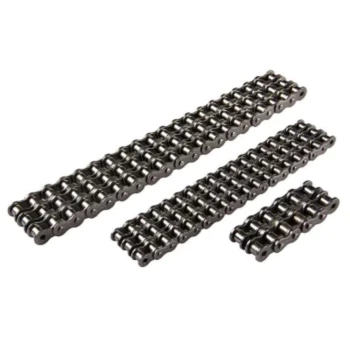
Can a drive chain be used in a printing press or bindery application?
Yes, a drive chain can be used in a printing press or bindery application where precise and reliable power transmission is required. Here is a detailed explanation:
Printing presses and bindery equipment involve complex machinery that requires the efficient transfer of power to perform various functions such as paper feeding, cutting, folding, and binding. Drive chains offer several advantages in these applications:
- Precision and Synchronization: Drive chains provide accurate and synchronized power transmission, allowing precise control over the movement of the printing press or bindery equipment. The interlocking design of the chain and sprockets ensures consistent and reliable performance, enabling precise registration of paper and precise execution of operations.
- High Load Capacity: Printing presses and bindery equipment often handle large volumes of paper or materials, requiring a drive system capable of handling high loads. Drive chains are designed to withstand high load capacities, ensuring reliable power transmission and the ability to handle the demanding requirements of these applications.
- Smooth and Quiet Operation: Drive chains, when properly lubricated and maintained, provide smooth and quiet operation. This is crucial in printing and bindery applications where noise reduction is desired to create a comfortable working environment and minimize disturbances during operation.
- Reliability and Durability: Drive chains are known for their durability and reliability. They are designed to withstand continuous operation and the demands of high-speed printing and bindery processes. With proper maintenance, including lubrication and periodic inspection, drive chains can provide long service life, reducing downtime and maintenance costs.
- Compatibility with Variable Speeds: Printing presses and bindery equipment often require variable speeds to accommodate different printing or bindery processes. Drive chains can be easily integrated with variable speed drives, allowing precise control over the equipment’s speed and accommodating the specific requirements of each printing or bindery task.
- Compact Design: Drive chains offer a compact and space-efficient solution for power transmission in printing presses and bindery equipment. The chain’s flexible design allows it to navigate around tight spaces and complex machine layouts, enabling efficient utilization of available space.
- Customizability: Drive chains can be customized to meet the specific requirements of printing press and bindery applications. They can be designed with different pitches, widths, and attachments to suit the unique needs of each machine and its respective processes.
When selecting a drive chain for a printing press or bindery application, factors such as speed, load capacity, space limitations, and compatibility with the printing or bindery processes should be considered. It is essential to follow the manufacturer’s recommendations regarding installation, lubrication, and maintenance to ensure optimal performance and longevity of the drive chain.
By utilizing drive chains in printing presses and bindery equipment, operators can benefit from precise power transmission, high load capacity, smooth operation, reliability, durability, compatibility with variable speeds, compact design, and customization options, contributing to efficient and high-quality printing and bindery processes.
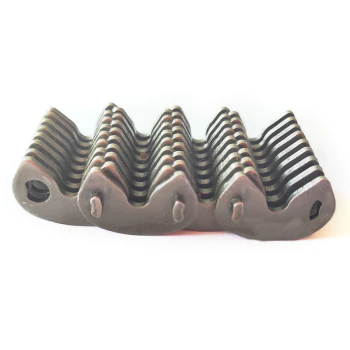
How does the elongation of a drive chain affect its performance?
The elongation of a drive chain can have a significant impact on its performance and overall operation. Here is a detailed explanation:
Drive chains are subject to wear and elongation over time due to factors such as load, speed, tension, lubrication, and maintenance. Elongation refers to the increase in the chain’s pitch length, which can lead to several performance-related issues:
- Loss of Tension: As a chain elongates, it loses tension and becomes slack. This results in a loss of power transmission efficiency and can lead to skipping or jumping of the chain on the sprockets. A slack chain may also cause a loss of accuracy and synchronization in driven systems.
- Poor Performance: Elongation can affect the overall performance of the drive system. It can lead to increased backlash, reduced precision, and the potential for chain derailment or disengagement from the sprockets. These issues can result in decreased efficiency, unreliable operation, and increased risk of damage to the chain or other components.
- Increased Wear: Elongation causes increased wear between the chain links, pins, and bushings. This wear can accelerate the elongation process and further decrease the chain’s performance and service life. It can also lead to increased friction, heat generation, and the potential for chain failure if not addressed promptly.
- Reduced Load-Carrying Capacity: Elongation reduces the effective pitch length of the chain, resulting in a decreased load-carrying capacity. This can limit the chain’s ability to handle heavy loads, potentially leading to premature failure or inadequate performance in applications where high loads are involved.
- Increased Noise and Vibration: Elongation can cause increased noise and vibration during chain operation. The slack chain may produce rattling or banging sounds, and the vibration can negatively affect the overall system performance and operator comfort.
Regular inspection and maintenance are essential to monitor chain elongation and address it promptly. Measuring elongation using specialized tools and following the manufacturer’s recommended elongation limits can help determine when a chain requires replacement or adjustment.
Proper chain tension, lubrication, and regular maintenance practices, including periodic tension adjustment and lubrication replenishment, can help minimize elongation and ensure optimal chain performance. It is important to follow the manufacturer’s guidelines and consult with experts or technicians to establish appropriate maintenance schedules and procedures for the specific drive chain and application.
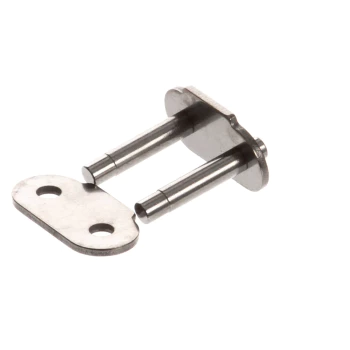
How does the wear life of a drive chain compare to other power transmission systems?
The wear life of a drive chain can vary depending on factors such as the application, operating conditions, maintenance practices, and the quality of the chain itself. Here’s an explanation:
The wear life of a drive chain is influenced by several factors:
- 1. Load and Stress: The load capacity and stress placed on the drive chain affect its wear life. Higher loads and stress levels can lead to accelerated wear and reduced lifespan.
- 2. Lubrication and Maintenance: Proper lubrication and maintenance practices significantly impact the wear life of a drive chain. Regular lubrication, tension adjustment, and inspection help minimize wear and extend the chain’s lifespan.
- 3. Operating Conditions: Environmental factors such as temperature, humidity, dust, and exposure to contaminants can influence the wear life of a drive chain. Harsh operating conditions may accelerate wear and reduce the chain’s lifespan.
- 4. Chain Quality: The quality and construction of the drive chain play a vital role in its wear life. Chains made from high-quality materials and manufactured to precise specifications tend to have longer wear life compared to lower-quality chains.
When comparing the wear life of a drive chain to other power transmission systems, such as belts or gears, it is important to consider the specific application and operating conditions. In some cases, drive chains may offer longer wear life compared to belts, especially in heavy-load or high-torque applications. However, the wear life of gears can often surpass that of drive chains, particularly in applications with high-speed and high-load requirements.
It is essential to consult manufacturer specifications, consider the specific requirements of the application, and evaluate the wear life of different power transmission systems to determine the most suitable option for a given application.


editor by CX 2023-09-11