Product Description
PROFESSIONAL ELEVATOR AND ESCALATOR ROLLERS SUPPLIER
Finding the best solutions for our customers is a major part of what we do. After providing us with some basic information, we will promptly prepare a proposal based on your specific requirements. Whether you need rollers or other plastic parts, you can rest assured that we will only provide you with proven quality products.
Once you have submitted the form, our experts will prepare a tailored product proposal for you.
| GAA20401B601 Escalator Main Drive Chain Sprocket
|
What we need to know:
_ Outer diameter (D)
_ Inner diameter (d)
_ Width (B)
_ Ball bearing
_ Quantity
_ Indoor / Outdoor use
| Outer diameter | D |
| Inner diameter | d |
| Width | B |
| Part number | If have |
| Bearing type | like 6204 or others |
ORIGINAL EQUIPMENT MANUFACTURER QUALITY
THE BEST MATERIALS FOR THE OPTIMAL SOLUTION
PROVIDE ALL KINDS OF ESCALATOR AND ELEVATOR ROLLERS
We cooperation with the munufacturer that have many years of experience in manufacturing products for numerous major escalator manufacturers. So we know virtually everything there is to know about the product and quality requirements of the industry. Our experience and expertise are reflected in the products in our standard range.
The various different parts in escalators are constantly exposed to a variety of environmental influences such as humidity, oils, detergents and solvents, rainwater, dirt and salt water. This is why we only provide you with tested and approved quality in accordance with our cooperation factory standard.
You can count on our know-how. We will make sure you have the right solution to meet your specific requirements – because we know how crucial
reliability and longevity are.
| After-sales Service: | Replacement Within The Warranty Period |
|---|---|
| Warranty: | 12 Months |
| Type: | Heavy |
| Load Capacity: | 4500 Persons/H |
| Use of Occasions: | Public Traffic |
| Speed: | 0.5M/S |
| Customization: |
Available
| Customized Request |
|---|
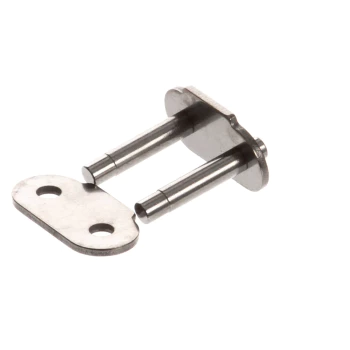
How does the lubrication method affect the performance of a drive chain?
The lubrication method used for a drive chain has a significant impact on its performance and longevity. Here is a detailed explanation:
Proper lubrication is essential for ensuring the smooth and efficient operation of a drive chain. It reduces friction, minimizes wear, and prevents corrosion between the chain’s moving parts. The lubrication method chosen can affect the performance of the drive chain in the following ways:
- Reduced Friction and Wear: Adequate lubrication forms a protective layer between the chain’s moving parts, reducing metal-to-metal contact and minimizing friction. This helps to prevent excessive wear, elongation, and premature failure of the chain. The lubricant acts as a barrier, allowing the chain to operate with reduced resistance and improved efficiency.
- Heat Dissipation: Proper lubrication helps dissipate heat generated by the friction between the chain’s components during operation. This prevents overheating and the potential degradation of the lubricant, ensuring the chain can operate within its designed temperature range. Effective heat dissipation contributes to the longevity and optimal performance of the drive chain.
- Protection against Corrosion: Lubrication provides a protective coating on the chain, safeguarding it against moisture, contaminants, and corrosive substances. This is particularly important in environments where the chain is exposed to water, chemicals, or harsh operating conditions. The lubricant prevents rust and corrosion, preserving the integrity of the chain and extending its service life.
- Reduction of Noise and Vibration: Proper lubrication helps to reduce noise and vibration generated by the drive chain during operation. It acts as a damping agent, absorbing and minimizing the transmission of vibrations, resulting in smoother and quieter chain operation. This contributes to a more comfortable and productive working environment.
- Selection of Lubricant: The choice of lubricant depends on various factors, including the application, operating conditions, temperature, speed, and load requirements. Different lubricants, such as oils, greases, or solid lubricants, may be suitable for different applications. The lubricant must be compatible with the chain material and should possess the necessary viscosity, temperature resistance, and lubricating properties to meet the specific demands of the drive chain.
- Appropriate Lubrication Frequency: The lubrication method also includes determining the appropriate frequency for lubrication. Regular lubrication intervals must be established based on the chain’s operating conditions and the manufacturer’s recommendations. Insufficient lubrication or over-lubrication can both lead to performance issues, such as increased friction, poor lubricant distribution, or accelerated contamination buildup.
It is crucial to follow the manufacturer’s guidelines and recommendations regarding lubrication methods, lubricant types, and lubrication intervals for the specific drive chain. Regular inspection and maintenance should be conducted to monitor the lubrication effectiveness and ensure proper lubricant replenishment.
By selecting the appropriate lubrication method and maintaining proper lubrication, operators can optimize the performance, reliability, and lifespan of the drive chain, contributing to smoother operation, reduced wear, and improved overall efficiency.
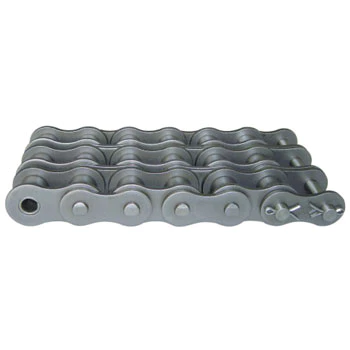
What are the benefits of using a high-speed drive chain?
Using a high-speed drive chain offers several benefits compared to standard drive chains when operating in applications requiring fast and efficient power transmission. Here is a detailed explanation:
High-speed drive chains are specifically designed and engineered to withstand the demands of rapid rotational speeds while maintaining optimal performance. The benefits of using such chains include:
- Increased Power Transmission: High-speed drive chains are designed to handle higher rotational speeds, allowing for increased power transmission capabilities. They enable efficient and reliable transfer of power, ensuring smooth and consistent operation at elevated speeds.
- Enhanced Durability: High-speed drive chains are constructed using materials and manufacturing techniques that provide enhanced durability and resistance to wear and fatigue. These chains are designed to withstand the increased stresses and forces associated with high-speed operation, resulting in a longer service life and reduced maintenance requirements.
- Reduced Friction and Heat Generation: High-speed drive chains are engineered to minimize friction and heat generation during operation. This helps to reduce energy losses, maintain higher efficiency, and prevent excessive wear on the chain and related components. It also contributes to the overall smooth operation and longevity of the chain.
- Precision and Accuracy: High-speed drive chains offer precise and accurate power transmission, ensuring synchronization and alignment of components even at elevated speeds. This is crucial in applications where precise timing and coordination are essential, such as in high-speed machinery or automated systems.
- Improved System Performance: By utilizing high-speed drive chains, the overall performance of the system can be enhanced. These chains enable rapid acceleration and deceleration, quick response times, and efficient power transfer, leading to improved productivity, reduced cycle times, and optimized system performance.
- Application Versatility: High-speed drive chains can be utilized in a wide range of industries and applications that require fast and efficient power transmission. They are commonly used in high-speed machinery, automation systems, packaging lines, conveyor systems, and other applications where speed is a critical factor.
It is important to consider the specific requirements of the application, including load capacity, speed capabilities, lubrication requirements, and maintenance considerations when selecting a high-speed drive chain. Regular inspection, lubrication, and tension adjustment are crucial to ensure optimal performance and longevity of the drive chain in high-speed applications.
By utilizing high-speed drive chains, operators can benefit from increased power transmission capabilities, enhanced durability, reduced friction and heat generation, improved precision, and optimized system performance in applications that demand high-speed operation.
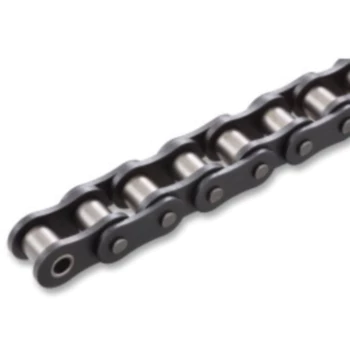
How do you properly tension a drive chain?
Tensioning a drive chain properly is important to ensure optimal performance, minimize wear, and prevent premature failure. Here are the steps to properly tension a drive chain:
- Identify the Tensioning Method: Determine the type of tensioning system used for your specific drive chain. Common tensioning methods include manual adjustment, automatic tensioners, or tensioning devices incorporated into the chain drive system.
- Refer to Manufacturer’s Guidelines: Consult the manufacturer’s guidelines or specifications for the recommended tensioning range and procedure specific to your drive chain. Manufacturers often provide specific instructions regarding the appropriate tensioning method and the acceptable slack or sag limits.
- Measure the Initial Tension: Measure the initial tension of the drive chain. This can be done using a tension gauge or by applying manual force to the chain at a specific point and measuring the deflection or sag. Ensure that the initial tension is within the recommended range specified by the manufacturer.
- Adjust Tension: If the initial tension is outside the recommended range, adjust the tension accordingly. For manual tensioning systems, typically a tensioning device, such as an adjusting bolt or eccentric cam, is used to increase or decrease the tension. Follow the manufacturer’s instructions for the specific adjustment mechanism.
- Check Alignment: While tensioning the chain, ensure that it remains properly aligned on the sprockets. Misalignment can cause uneven wear and premature failure. Make any necessary alignment adjustments as per the manufacturer’s recommendations.
- Recheck Tension: After tension adjustment and alignment, recheck the tension to ensure it falls within the recommended range. Use a tension gauge or follow the manufacturer’s guidelines for measuring the tension. Repeat the adjustment process if necessary.
- Verify Operation: After tensioning, operate the machinery or system with the tensioned chain and observe its performance. Check for any abnormal noise, vibration, or unusual wear patterns. If any issues persist, reevaluate the tensioning and alignment.
It is important to note that proper tensioning may require periodic rechecks and adjustments over time as the chain elongates or wears. Regular maintenance and inspections will help ensure the drive chain remains properly tensioned and aligned for optimal performance and longevity.


editor by CX 2023-08-18