Product Description
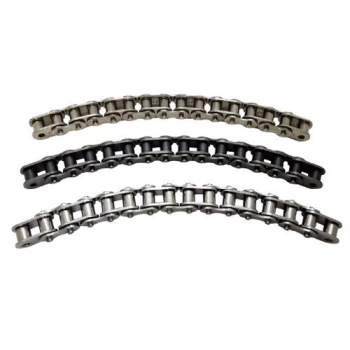
We can supply different chains for escalator, newell return chain with bearing, step chain… any needs please feel free to contact us for more information.
About Us
With more than 30 years’ experience in machinery industry, Mr.Qian has the factory of his own in 2001.
Since 2006, our factory has developed from a factory that mainly provides machinery processing services to a specialized manufacturer of a series of guide rails for elevators.
We exported from 2008, till now we have exported many countries.
Our factory has passed ISO 9001 certificate. And our guide rails has passed type test in our industry.
After several years in this field,now we also can produce and supply some other elevator parts, if they exported with the rails ,the price will be much better. For more information please refer to our website.
Product Description
Xihu (West Lake) Dis. system; Safety System;Traction System;Electric System;Door System;Cabin and CW parts
Please contact with us for your information.
| Xihu (West Lake) Dis. System | Safety System | Traction System | Electric System | |||
| Xihu (West Lake) Dis. rail | Light Curtain | Rope Attachment | elevator fan | |||
| Rail clip | Safety Gear | Wire Rope | elevator switch | |||
| Bolts | Speed Governor | Traction Machine | Inspection Box | |||
| Rail bracket | Rope Brake | Deflector Sheave | Hall Lantern | |||
| Xihu (West Lake) Dis. shoes | Buffer | Anti-vibration Pad | Push Button | |||
| Compensation Chain | Display | |||||
| Xihu (West Lake) Dis. Device | COP,LOP | |||||
| Inverter | ||||||
| Door System | ARD | |||||
| Elevator Cable | ||||||
| Cabin and CW parts | ||||||
| Escalator parts | ||||||
| Type: | Light |
|---|---|
| Load Capacity: | 4500 Persons/H |
| Use of Occasions: | Public Traffic |
| Speed: | 0.5M/S |
| Slope Angle: | 30° |
| Width of Stair: | 800mm |
| Customization: |
Available
| Customized Request |
|---|
How does the lubricant selection affect the performance of a drive chain?
The selection of the proper lubricant plays a critical role in the performance and longevity of a drive chain. Here is a detailed explanation:
Lubrication is essential for maintaining the smooth operation and reducing the wear and friction between the chain’s moving parts. The lubricant creates a protective film that reduces metal-to-metal contact and prevents excessive heat generation. The lubricant selection affects the drive chain’s performance in the following ways:
- Reduced Friction and Wear: The primary function of lubrication is to reduce friction between the chain’s components. A well-chosen lubricant minimizes metal-to-metal contact, reducing wear and extending the chain’s lifespan. It helps to prevent premature failure and ensures the efficient transfer of power throughout the chain.
- Enhanced Load Capacity: Proper lubrication reduces the stress on the chain by creating a lubricating film that cushions the contact between the pins, bushings, and rollers. This improves the chain’s load-carrying capacity, allowing it to handle heavier loads and resist elongation or deformation under high loads.
- Corrosion Protection: Some lubricants are formulated with additives that provide corrosion protection. These lubricants create a barrier that shields the chain from moisture, chemicals, and environmental contaminants, reducing the risk of corrosion and extending the chain’s life in harsh or corrosive environments.
- Temperature Stability: Different lubricants have varying temperature ranges in which they can effectively perform. The lubricant selection should consider the operating temperatures of the application. High-temperature lubricants are designed to withstand elevated temperatures without breaking down or evaporating, ensuring proper lubrication even in hot environments.
- Reduced Noise and Vibration: Proper lubrication contributes to smoother and quieter chain operation. It helps to minimize noise and vibration caused by metal-to-metal contact, resulting in a quieter working environment and improved operator comfort.
- Contamination Control: Lubricants can also play a role in controlling contaminants that may enter the chain system. Some lubricants have properties that resist the accumulation of dust, dirt, or other particles, helping to keep the chain clean and preventing abrasive wear.
The lubricant selection should consider various factors, including the application’s operating conditions, load requirements, temperature range, speed, and compatibility with the chain material. Manufacturers often provide lubrication recommendations based on these factors.
Regular lubrication maintenance is essential to ensure the continued performance of the drive chain. Lubrication intervals should be followed, and the lubricant should be replenished or replaced as recommended by the manufacturer or based on inspection and monitoring of the chain’s condition.
By selecting the appropriate lubricant and implementing proper lubrication practices, operators can ensure optimal chain performance, reduce wear and friction, extend chain life, and minimize maintenance requirements in various industrial applications.
Can a drive chain be used in a printing or paper industry application?
Yes, a drive chain can be used in various applications within the printing and paper industry. Here is a detailed explanation:
The printing and paper industry requires reliable and precise power transmission solutions to operate machinery for tasks such as printing, cutting, folding, and conveying. Drive chains offer several advantages in these applications:
- Precision and Accuracy: Drive chains provide accurate and repeatable power transmission, ensuring precise movement and control required in printing and paper industry applications.
- High Load Capacity: Drive chains have high load-carrying capacity, making them suitable for conveying heavy rolls of paper, moving printing plates, or driving cutting and folding mechanisms.
- Compact Design: Drive chains have a compact design, allowing them to fit in tight spaces and transmit power efficiently in confined areas commonly found in printing and paper machinery.
- Reliability and Durability: Drive chains are known for their reliability and durability. They can withstand continuous operation, shock loads, and varying environmental conditions typically encountered in the printing and paper industry.
- Customization and Adaptability: Drive chains offer flexibility and customization options to meet the specific needs of different printing and paper applications. They can be tailored in terms of size, pitch, attachments, and materials to accommodate various requirements.
- Compatibility with Ancillary Devices: Drive chains can be easily integrated with other components commonly used in the printing and paper industry, such as tensioners, guides, sprockets, and bearings, to ensure optimal performance and reliability.
It is important to select the appropriate drive chain type, size, and material based on the specific requirements of the printing and paper application. Additionally, regular maintenance, including inspection, lubrication, and tension adjustment, is crucial to ensure optimal performance and longevity of the drive chain in these applications.
By leveraging the advantages of drive chains, the printing and paper industry can achieve efficient and reliable power transmission, enabling smooth operation and high-quality production.
How do you properly tension a drive chain?
Tensioning a drive chain properly is important to ensure optimal performance, minimize wear, and prevent premature failure. Here are the steps to properly tension a drive chain:
- Identify the Tensioning Method: Determine the type of tensioning system used for your specific drive chain. Common tensioning methods include manual adjustment, automatic tensioners, or tensioning devices incorporated into the chain drive system.
- Refer to Manufacturer’s Guidelines: Consult the manufacturer’s guidelines or specifications for the recommended tensioning range and procedure specific to your drive chain. Manufacturers often provide specific instructions regarding the appropriate tensioning method and the acceptable slack or sag limits.
- Measure the Initial Tension: Measure the initial tension of the drive chain. This can be done using a tension gauge or by applying manual force to the chain at a specific point and measuring the deflection or sag. Ensure that the initial tension is within the recommended range specified by the manufacturer.
- Adjust Tension: If the initial tension is outside the recommended range, adjust the tension accordingly. For manual tensioning systems, typically a tensioning device, such as an adjusting bolt or eccentric cam, is used to increase or decrease the tension. Follow the manufacturer’s instructions for the specific adjustment mechanism.
- Check Alignment: While tensioning the chain, ensure that it remains properly aligned on the sprockets. Misalignment can cause uneven wear and premature failure. Make any necessary alignment adjustments as per the manufacturer’s recommendations.
- Recheck Tension: After tension adjustment and alignment, recheck the tension to ensure it falls within the recommended range. Use a tension gauge or follow the manufacturer’s guidelines for measuring the tension. Repeat the adjustment process if necessary.
- Verify Operation: After tensioning, operate the machinery or system with the tensioned chain and observe its performance. Check for any abnormal noise, vibration, or unusual wear patterns. If any issues persist, reevaluate the tensioning and alignment.
It is important to note that proper tensioning may require periodic rechecks and adjustments over time as the chain elongates or wears. Regular maintenance and inspections will help ensure the drive chain remains properly tensioned and aligned for optimal performance and longevity.


editor by CX 2023-08-17