Product Description
Products Collection
Product Description
One of the most compelling benefits of our QLP inverted tooth chain is its versatility and incredible durability. Whether you need a light-duty conveying or heavy-duty power transmission chain, the chain can be customised to meet your needs.
The chain is also corrosion-resistant. This means it can be used in harsh environments without worrying about rust or other types of damage. Its unique tooth shape reduces noise and vibration.
When you need a specific design, we can provide customised solutions based on what you need. Whether you require specific features, plans, materials, or specifications, our team can work to ensure you get a chain that fully meets your needs.
Are you looking for other chains?
Leave your message below, and feel free to contact us!
FAQ
| Question 1: Are you a Manufacturer or a Trading Company? |
| Answer: We are a 100% chain manufacturer with 23 years of experience |
| Question 2: What should I provide to get a quotation? |
| Answer: 1. Type of the chain (with photos if available) 2. Pitch of the chain 3. Width of the chain 4. Length and quantity of the chain 5. Other specific requirements |
| Question 3: How long is your manufacturing and delivery time? |
| Answer: Products are usually finished in 2 weeks, depending on the type and quantity. Also, please get in touch with us to check the delivery time to your destination. |
| Question 4: How long is your guaranteed time? |
| Answer: We offer a three-year guarantee if you purchase chains and matched sprockets together. If you need chains only, a one-year guarantee can also be confirmed. |
| Question 5: Trade terms and Payment terms? |
| Answer: We accept EXW, FOB, DDU, Door to Door. Payment terms, such as T/T, L/C, and Western Union, are acceptable. We also provide the service of Online Trading in this B2B platform. |
Company Profile
|
Shipping Cost:
Estimated freight per unit. |
To be negotiated |
|---|
| Standard or Nonstandard: | Standard |
|---|---|
| Application: | Textile Machinery, Garment Machinery, Conveyer Equipment, Packaging Machinery, Food Machinery, Marine, Mining Equipment, Agricultural Machinery, Car |
| Structure: | Tooth Chain |
| Samples: |
US$ 100/Meter
1 Meter(Min.Order) | Order Sample |
|---|
| Customization: |
Available
| Customized Request |
|---|
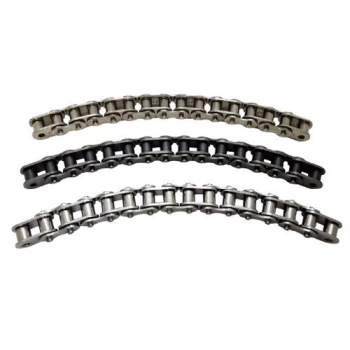
How does the lubricant selection affect the performance of a drive chain?
The selection of the proper lubricant plays a critical role in the performance and longevity of a drive chain. Here is a detailed explanation:
Lubrication is essential for maintaining the smooth operation and reducing the wear and friction between the chain’s moving parts. The lubricant creates a protective film that reduces metal-to-metal contact and prevents excessive heat generation. The lubricant selection affects the drive chain’s performance in the following ways:
- Reduced Friction and Wear: The primary function of lubrication is to reduce friction between the chain’s components. A well-chosen lubricant minimizes metal-to-metal contact, reducing wear and extending the chain’s lifespan. It helps to prevent premature failure and ensures the efficient transfer of power throughout the chain.
- Enhanced Load Capacity: Proper lubrication reduces the stress on the chain by creating a lubricating film that cushions the contact between the pins, bushings, and rollers. This improves the chain’s load-carrying capacity, allowing it to handle heavier loads and resist elongation or deformation under high loads.
- Corrosion Protection: Some lubricants are formulated with additives that provide corrosion protection. These lubricants create a barrier that shields the chain from moisture, chemicals, and environmental contaminants, reducing the risk of corrosion and extending the chain’s life in harsh or corrosive environments.
- Temperature Stability: Different lubricants have varying temperature ranges in which they can effectively perform. The lubricant selection should consider the operating temperatures of the application. High-temperature lubricants are designed to withstand elevated temperatures without breaking down or evaporating, ensuring proper lubrication even in hot environments.
- Reduced Noise and Vibration: Proper lubrication contributes to smoother and quieter chain operation. It helps to minimize noise and vibration caused by metal-to-metal contact, resulting in a quieter working environment and improved operator comfort.
- Contamination Control: Lubricants can also play a role in controlling contaminants that may enter the chain system. Some lubricants have properties that resist the accumulation of dust, dirt, or other particles, helping to keep the chain clean and preventing abrasive wear.
The lubricant selection should consider various factors, including the application’s operating conditions, load requirements, temperature range, speed, and compatibility with the chain material. Manufacturers often provide lubrication recommendations based on these factors.
Regular lubrication maintenance is essential to ensure the continued performance of the drive chain. Lubrication intervals should be followed, and the lubricant should be replenished or replaced as recommended by the manufacturer or based on inspection and monitoring of the chain’s condition.
By selecting the appropriate lubricant and implementing proper lubrication practices, operators can ensure optimal chain performance, reduce wear and friction, extend chain life, and minimize maintenance requirements in various industrial applications.
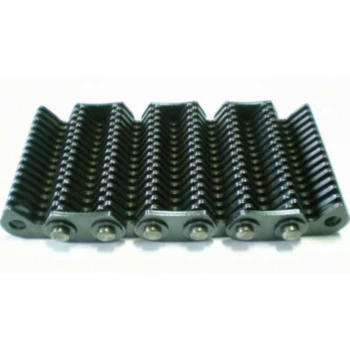
What are the advantages of using a self-lubricating drive chain?
A self-lubricating drive chain, also known as a maintenance-free or lubrication-free chain, offers several advantages compared to traditional chains that require manual lubrication. Here is a detailed explanation of the advantages:
- No External Lubrication: The primary advantage of a self-lubricating drive chain is that it eliminates the need for external lubrication. These chains are pre-lubricated during the manufacturing process with a special lubricant that is designed to last throughout the chain’s lifespan.
- Maintenance-Free Operation: Self-lubricating chains significantly reduce the maintenance requirements. Without the need for regular lubrication, the chains minimize downtime associated with lubrication tasks, such as reapplying grease or oil and cleaning excess lubricant.
- Cleaner Operating Environment: Self-lubricating chains help maintain a cleaner operating environment as they don’t require additional lubricants that can attract dirt, dust, or other contaminants. This can be beneficial in applications where cleanliness is crucial, such as food processing, pharmaceuticals, or cleanrooms.
- Consistent Lubrication: Self-lubricating chains are designed to provide consistent and controlled lubrication throughout their service life. The lubricant is evenly distributed within the chain, ensuring smooth operation, reducing friction, and minimizing wear.
- Extended Chain Life: The consistent and proper lubrication provided by self-lubricating chains contributes to extended chain life. By reducing wear, friction, and the accumulation of contaminants, these chains can operate at their optimal performance level for a longer duration.
- Reduced Downtime and Costs: Self-lubricating chains help reduce downtime and costs associated with lubrication maintenance. The elimination of manual lubrication tasks allows for more efficient operation and reduces the consumption and expenses associated with lubricants.
- Environmental Benefits: Using self-lubricating chains can have environmental benefits. With reduced reliance on external lubricants, there is less waste generation and potential contamination of the surrounding environment.
It is important to note that self-lubricating chains have specific lubrication requirements and operating conditions. It is essential to follow the manufacturer’s recommendations regarding chain speed, temperature limits, and environmental factors to ensure optimal performance.
Overall, the advantages of using a self-lubricating drive chain include maintenance-free operation, cleaner environment, extended chain life, reduced downtime and costs, and environmental benefits. These benefits make self-lubricating chains a preferred choice in various applications where reliable and low-maintenance power transmission is required.
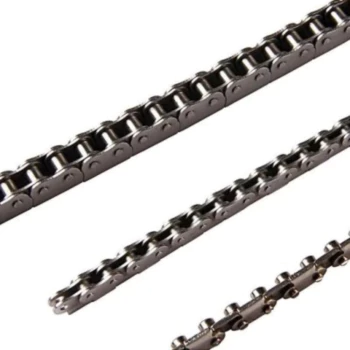
What are the different types of drive chains?
Drive chains come in various types, each designed for specific applications and operating conditions. Here are some common types of drive chains:
- Roller Chains: Roller chains are the most common type of drive chain. They consist of cylindrical rollers that are held together by inner and outer plates. Roller chains are widely used in motorcycles, bicycles, industrial machinery, and automotive systems.
- Double Pitch Chains: Double pitch chains have longer pitches, meaning the distance between each roller is greater compared to standard roller chains. They are often used in applications that require slower speeds and lighter loads.
- Leaf Chains: Leaf chains consist of interleaved metal plates connected by pins. They are known for their high tensile strength and are commonly used in forklifts, hoists, and other heavy-duty lifting equipment.
- Silent Chains: Silent chains, also known as inverted-tooth chains, have tooth-shaped plates that engage with sprockets. They are called “silent” chains because they operate with reduced noise and vibration compared to roller chains. Silent chains are used in timing drives and applications that require high-speed and high-torque transmission.
- Engineered Chains: Engineered chains are designed for specific industries or applications that require specialized properties, such as corrosion resistance, high temperature tolerance, or self-lubrication. Examples include drive chains, plastic chains, and self-lubricating chains.
Each type of drive chain has its own advantages and considerations, and the choice depends on factors such as the application requirements, load capacity, speed, environmental conditions, and maintenance needs.


editor by CX 2023-07-25